
Building a Strong Foundation: Essential Prework for ServiceNow HRSD Knowledge Management
Before you begin implementing ServiceNow HRSD Knowledge Management, it’s advisable to review the resources provided by ServiceNow to ensure a solid foundation for success.
Here’s a review of the format and content of the resources mentioned:
1. Getting Started with Knowledge Management
- This resource is a valuable starting point for anyone new to Knowledge Management. It likely covers fundamental concepts, terminology, and the basics of Knowledge Management within the ServiceNow ecosystem.
2. HR Knowledge Management Success Playbook
- The HR Knowledge Management Success Playbook is likely a comprehensive guide that provides strategies and best practices specific to HR departments. It’s an excellent resource for organizations looking to streamline HR processes using ServiceNow.
3. HR Service Delivery Academy: Knowledge Management
- This resource is particularly helpful for those who prefer a structured learning approach. It might include courses, webinars, or training materials that delve deeper into Knowledge Management within the context of HR Service Delivery.
4. Knowledge-Centered Service (KCS) Fundamentals
- Knowledge-Centered Service (KCS) is a service delivery methodology many industry experts call a great resource for knowledge best practices.
- The four key fundamentals are explained succinctly and serve as a reminder of the core principles:
- New content is created as a byproduct of problem-solving: Knowledge should result from practical problem-solving, ensuring its relevance and effectiveness.
- Content is reviewed and enhanced: Continuous improvement is essential, and this point emphasizes the need for regular review and updates.
- Current collective experience is stored in a knowledge base, Highlighting the importance of a centralized knowledge base for easy access and sharing.
- Learning, cooperation, and knowledge sharing are incentivized: This reinforces the idea that a culture of knowledge sharing, and collaboration should be fostered.
Let’s Begin

Introduction to ServiceNow HRSD Knowledge Management
In today’s fast-paced business world, human resources departments face many challenges managing employee requests, inquiries, and the ever-growing volume of HR-related knowledge. ServiceNow HR Service Delivery (HRSD) Knowledge Management offers a powerful solution to streamline and enhance HR service delivery. By effectively managing knowledge, HR teams can respond to employee needs faster, improve compliance, and drive overall organizational efficiency.
In this blog post, I will dive into ServiceNow HRSD Knowledge Management, providing you with expert insights, real-world examples, and actionable steps to optimize your HR service delivery, with a focus on the importance of documentation, Standard Operating Procedures (SOPs), governance, and processes related to HRSD Knowledge Base.
Examples of ServiceNow HRSD Knowledge Management
ServiceNow HRSD Knowledge Management empowers HR teams to create, maintain, and share HR-related content, ensuring employees can access the information they need to resolve issues or answer common HR queries.
Here are a few real-world examples of how HR departments can leverage this functionality:
Streamlined Onboarding:
- Imagine a scenario where HR departments create a comprehensive knowledge base filled with well-structured onboarding guides, frequently asked questions (FAQs), and instructional videos. This resource becomes the compass for new hires, quickly guiding them through onboarding.
- The result? Reducing repetitive inquiries that would otherwise weigh down HR staff, freeing them to focus on more strategic tasks.
Simplified Benefits Management:
- Now, picture this: HR teams provide employees with information about benefits packages, enrollment procedures, and various plan options. This knowledge base is a one-stop shop for employees to make well-informed choices about their benefits.
- What’s the secret to success? Maintaining an up-to-date knowledge base with crystal-clear guidelines ensures employees fully grasp their benefits.
- The outcome is reduced errors when employees select their benefits, ultimately leading to higher employee satisfaction.
Efficient Leave Management:
- HR simplifies the leave request process in this scenario by offering self-service options. Picture knowledge articles that guide employees on submitting leave requests, checking their leave balances, and understanding company policies.
- The result? A significant decrease in administrative overhead for HR while empowering employees to take control of their leave requests. This win-win for HR and employees creates a more efficient and streamlined leave management process.
Governance and Compliance
- Expert Tip for Effective HRSD Knowledge Management: Documentation and SOPs are vital in ensuring governance and compliance. Proper documentation supports adherence to policies and guidelines, reducing non-compliance risk.
Benefits of ServiceNow HRSD Knowledge Management
Implementing ServiceNow HRSD Knowledge Management with a focus on documentation, SOPs, governance, and processes offers several benefits, including:
- Enhanced Employee Experience: Employees can find well-documented information and standardized procedures, reducing frustration and improving satisfaction.
- Time and Cost Savings: HR teams can follow established SOPs and governance, leading to more efficient processes, cost savings, and increased productivity.
- Compliance and Consistency: Well-documented processes and governance ensure employees receive consistent and up-to-date information, reducing compliance risks.
Consequences of Neglecting HRSD Knowledge Management
Neglecting documentation, SOPs, governance, and processes related to HRSD Knowledge Management can result in various adverse consequences:
- Increased Workload: HR teams may need help managing processes effectively, leading to a higher workload and potential errors.
- Compliance Risks: Inadequate documentation and governance can lead to compliance issues and legal liabilities.
- Employee Frustration: Lack of clear procedures and guidelines can result in frustration and dissatisfaction.
Practical Implementation Tips
To effectively manage your HRSD knowledge base, it’s essential to implement metrics and analytics that provide insights into the usage and effectiveness of your knowledge articles.
Here are key performance indicators to consider:
- Usage of SOPs:
- Measure how frequently Standard Operating Procedures (SOPs) are accessed and utilized by HR staff to ensure that documented processes are consistently followed.
- Governance Adherence:
- Monitor compliance with established governance rules, which includes overseeing content review cycles and approval workflows to maintain content accuracy and relevance.
- Knowledge Article Feedback:
- Collect feedback from employees to identify areas for improvement in knowledge articles and SOPs. This feedback loop helps refine and enhance your knowledge management strategy.
By systematically tracking these performance metrics and analytics, your HR department can make data-informed decisions, optimize the knowledge base, and continuously enhance the efficiency of HR service delivery.
- Establish a Clear Governance Framework:
- Define roles and responsibilities for managing the knowledge base.
- Implement approval workflows for knowledge articles to ensure accuracy and compliance with HR policies.
- Set up content review processes with regular intervals to keep information current.
- Document Standard Operating Procedures (SOPs):
- Create a standardized format for documenting HR processes and procedures.
- Ensure that SOPs are clear, concise, and easily accessible within the knowledge base.
- Train HR staff on following SOPs for consistent and efficient HR service delivery.
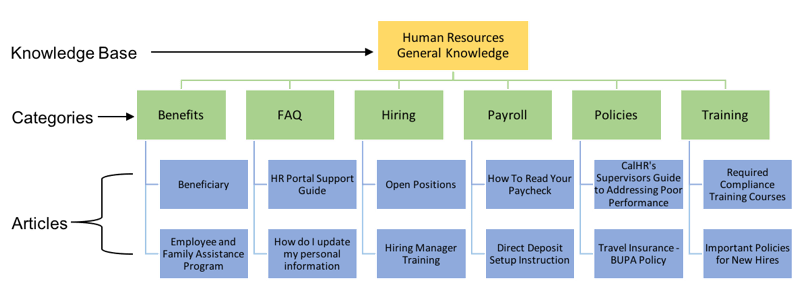
- Categorize and Tag Content:
- Organize knowledge articles into well-defined categories and use relevant tags for easy navigation.
- Implement a logical structure that helps users quickly locate the information they need.
- Regularly review and update categories and tags to reflect changes in HR processes.
- Promote Self-Service Options:
- Encourage employees to use the knowledge base as a first point of contact for HR inquiries.
- Communicate the availability and benefits of the knowledge base through internal channels.
- Train HR staff to guide employees toward self-service options, reducing their workload.
- Gather User Feedback:
- Create feedback mechanisms for employees to provide input on the knowledge base.
- Use employee feedback to identify improvement areas and refine existing knowledge articles.
- Continuously enhance the knowledge base based on user suggestions and needs.
- Continuous Training and Awareness:
- Regularly train HR staff on knowledge base usage and best practices.
- Create a culture of knowledge sharing and continuous improvement within the HR department.
- Keep HR teams updated on the latest features and enhancements of ServiceNow HRSD Knowledge Management.
- Security and Data Protection:
- Ensure that sensitive HR information is securely managed within the knowledge base.
- Implement appropriate access controls to protect confidential data.
- Comply with data privacy regulations and HR confidentiality requirements.
- Integration with Other HR Systems:
- Explore opportunities to integrate your knowledge base with other HR systems for a seamless user experience.
- Leverage automation and workflows to streamline processes further.
- Regular Updates and Maintenance:
- Schedule regular reviews of knowledge articles and SOPs to ensure they remain accurate and relevant.
- Keep up with changes in HR policies, laws, and regulations, and update the knowledge base accordingly.
By following these practical implementation tips, your HR department can harness the full potential of ServiceNow HRSD Knowledge Management to optimize HR service delivery, enhance the employee experience, and drive overall organizational efficiency.
Recap and Conclusions
In summary, ServiceNow HRSD Knowledge Management, when integrated with thorough documentation, SOPs, governance, and well-defined processes, can revolutionize your HR service delivery. This approach enhances the employee experience, reduces operational costs, and ensures compliance with HR policies.
To maximize the benefits of ServiceNow HRSD Knowledge Management, it’s essential to:
- Document all HR processes and procedures systematically.
- Establish transparent governance rules and approval workflows for knowledge base content.
- Continuously update knowledge articles and SOPs to align with current HR practices.
By following these steps and recognizing the significance of documentation, SOPs, governance, and HRSD Knowledge Management processes, you can elevate your HR service delivery and cultivate a more efficient and contented workforce.
Explore HRSD Excellence with ServiceNow – Your Journey Starts Here!
I invite you to join me in the forthcoming installments, where we will delve into more success stories, discuss strategies to tackle HRSD challenges using ServiceNow and explore the value of collaboration and continuous improvement.
Together, we’ll unlock the potential of HRSD project management with ServiceNow as we embark on this exciting adventure toward HRSD excellence. Don’t miss out on this opportunity to embrace ServiceNow and leave your mark in the realm of HRSD excellence.
If you’re ready for more insights, consider subscribing to my blog to receive regular updates and stay in the foreground of HRSD excellence.
I’d like to express my sincere gratitude for your support. Every like, share, and subscription shows your belief in my work. Your engagement fuels my passion and motivates me to create valuable content. I can’t thank you enough for being a part of my community and contributing to my growth. Your support means the world to me, and I look forward to sharing more with you in the future!

 SNC Development
You must be logged in to post a comment.