
30-Second Perspectives — Agentic AI
Autonomous doesn’t mean unsupervised. It means supervised differently.
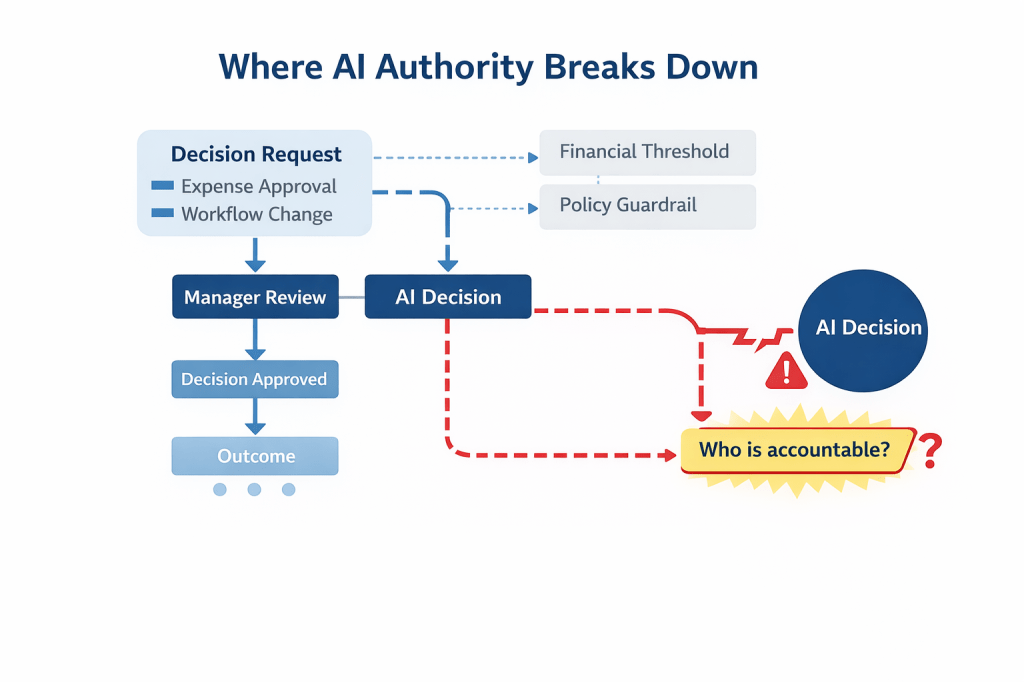
Most organizations are granting AI agents decision-making authority without clarifying who reviews, overrides, or owns the outcomes.
That’s not delegation. That’s abdication.
The Authority Problem
Traditional delegation works because reporting structures exist. An employee makes a decision. A manager reviews it. Authority escalates through defined pathways.
AI agents operate outside these pathways.
They don’t report to anyone. They don’t ask permission. They act within the scope you gave them—except you probably didn’t define that scope in operational terms.
What Unsupervised Actually Looks Like
An AI agent can:
- Approve expense requests
- Modify database records
- Send customer communications
- Trigger workflow changes
All without human confirmation.
The question isn’t whether the agent made the right decision.
The question is:
- Who defined “right”
- Who validated the logic?
- Who is accountable when it’s wrong?
Most organizations can’t answer that.
The Supervision Model That Works
Supervision for agents isn’t about watching them work. It’s about constraining where they can act and defining clear escalation triggers.
This means hard-coded redlines. Financial thresholds that require human approval. Policy interpretations that can’t be automated. Decisions that carry reputational or regulatory risk.
These aren’t suggestions. They’re system constraints.
What This Requires
If you’re deploying AI agents, you need to define three things:
- What decisions the agent can make autonomously.
- What decisions require human review.
- What decisions are prohibited entirely.
Without this, you don’t have governance. You have permission without accountability.
Leadership Question
If your AI agent creates liability tomorrow:
- Who is accountable?
- Where is that authority documented?
- How was the delegation formally defined?
If you can’t point to a control plane, you don’t have one.
What Comes Next
In the next 30-second perspective, we’ll examine the decisions that should never be delegated to AI, and why accountability can’t be automated.

 SNC Development
Leave a comment