
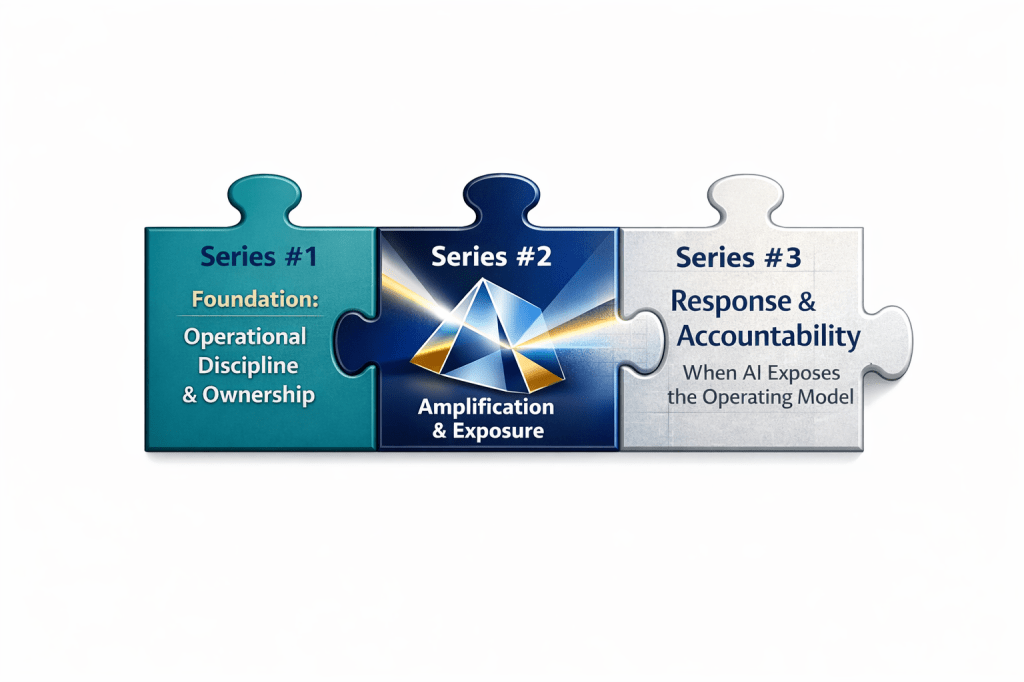
30-Second Perspectives — Series #3
Roadblocks & Challenges: Why AI Exposure Doesn’t Automatically Become Progress
In Series #1, we established that AI readiness is not about features, it’s about operational discipline and ownership.
In Series #2, we explored how AI acts as a live diagnostic, exposing how decisions, data, and accountability actually work inside the enterprise.
What follows is where many organizations stall.
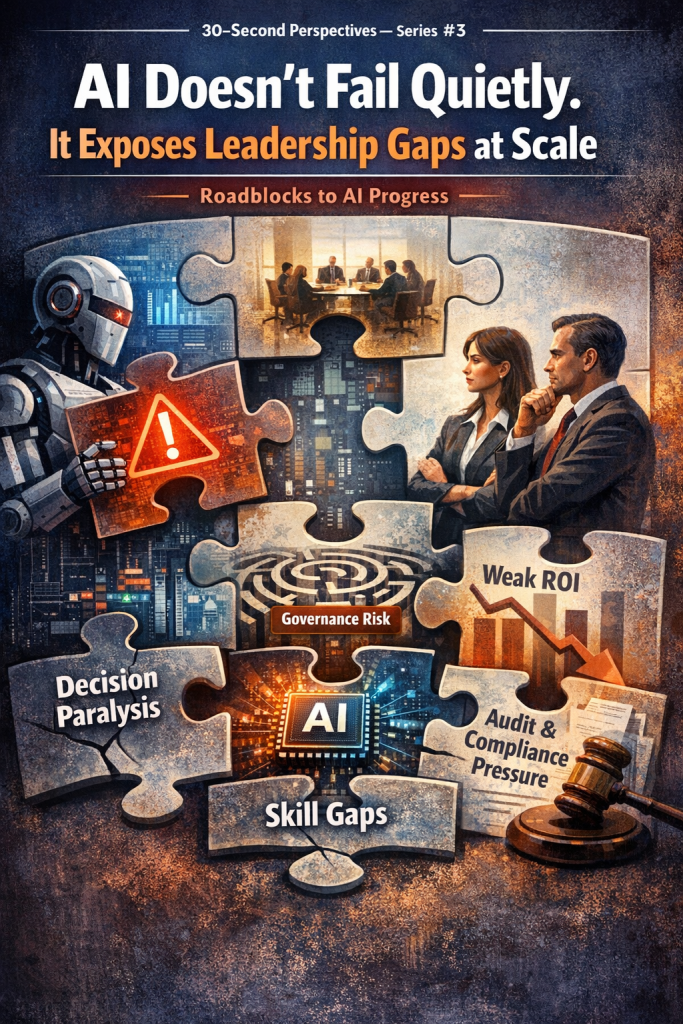
Once AI is embedded, it doesn’t fail quietly. It reveals how decisions are made, how data is governed, and how accountability functions in practice. Leaders often see these signals clearly.
What lags is response. The barriers are rarely technical. They appear as inertia between centralized decision-making and distributed innovation.
Governance maturity lags accelerating AI adoption, increasing risk rather than reducing it. Skills gaps surface, not just in building AI, but in evaluating outputs, validating outcomes, and operationalizing decisions at scale.
ROI becomes difficult to quantify beyond pilots, weakening executive conviction. Meanwhile, regulatory and audit expectations continue to outpace existing controls.
This is the inflection point.
AI has already exposed the operating model. What determines outcomes now is leadership response.
Organizations don’t stall because AI is unclear. They stall because ownership, incentives, and decision rights remain unresolved.
AI doesn’t create these roadblocks.
It makes them impossible to ignore.
Leadership Question
If AI has already revealed where your organization slows down, what structural barriers are you prepared to remove?
What Comes Next
In Series #4, we’ll shift from friction to resolution, examining the operating moves leaders make to convert AI exposure into durable operating advantage. This is where governance, operating models, and accountability mature from concepts into execution.

 SNC Development
You must be logged in to post a comment.