
The AI conversation has shifted. Features are everywhere. Platforms are racing ahead. But here’s the reality: capability is not readiness.
That’s why I’m launching 30-Second Perspectives, short, outcome-focused reflections on what it really takes to operate AI responsibly, beyond the hype and pilots. Each post is designed to be read in 30 seconds, yet leave lasting insight: what leaders need to notice, question, and act on when technology moves faster than organizational discipline.
Series #1: 30-Second Perspectives — AI Readiness Is Not Feature Readiness
Reflections on operating AI, governance, and organizational maturity
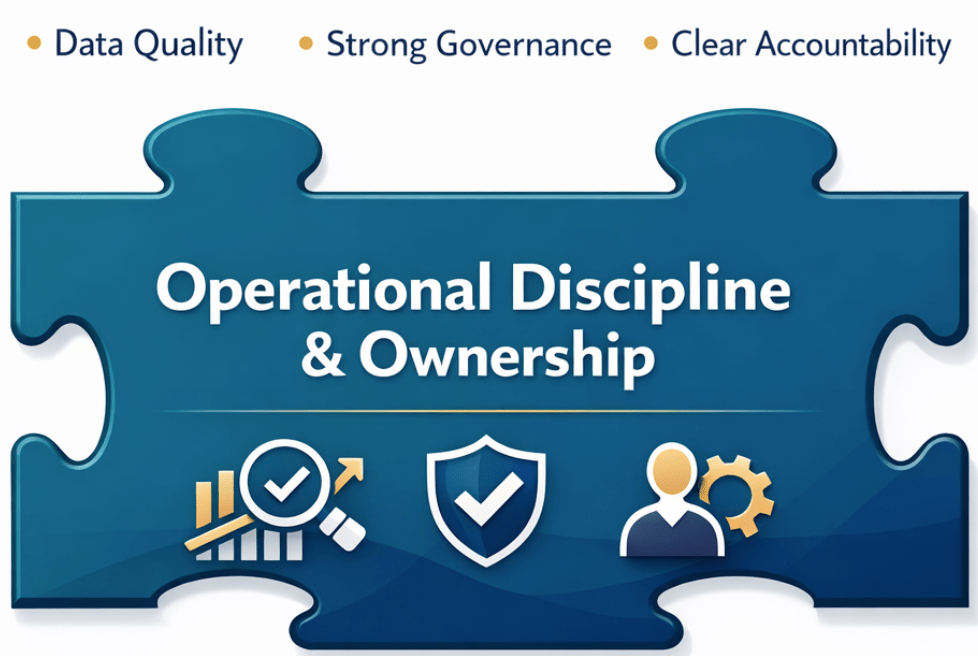
AI Readiness Is Not Feature Readiness AI readiness isn’t about turning features on. It’s about operational discipline.
Over the past 18 months, software vendors have rapidly embedded generative AI into enterprise platforms. Across industry conferences and product announcements, one message became clear: AI capability is now table stakes.
For many organizations, activation was treated as progress. Capability was mistaken for maturity. But readiness, in practice, meant something very different.
While vendors moved fast to deliver AI-enabled features, most organizations were still operating with:
- legacy ownership models
- fragmented data
- uneven knowledge quality
- unclear accountability.
The result? Not just a technology gap—a shift in how work, decisions, and trust function.
As organizations rushed to operationalize generative AI, many skipped the harder leadership question:
Are we ready to operate it?
Before scaling AI, ask yourself:
- Do we understand the most frequent questions our people are trying to answer?
- Do we trust the knowledge and systems feeding AI?
- Have we named clear owners for platforms, data, and content?
- Are we measuring outcomes and decision quality, not feature adoption?
- Is our data accurate, governed, and actionable?
Why this matters: Generative AI amplifies data quality—good or bad. Trust in analytics, knowledge bases, and source systems is a precondition, not a byproduct.
Data fitness is a leadership responsibility. It cannot be delegated to the platform.
This is where AI governance and AI maturity intersect. Technology sprinted ahead. Discipline lagged. Generative AI didn’t fail in these environments. It did exactly what it was designed to do: amplify existing conditions, good and bad.
The organizations seeing durable value weren’t the fastest adopters. They were the ones who treated AI readiness as an operating posture, not a launch milestone.
Turning AI on is easy. Operating it responsibly is the work.
Leadership Question: If AI is already embedded across your platforms, are your operating models, ownership structures, and governance ready to support it, or are you mistaking availability for readiness?
Join the conversation: What’s the biggest readiness gap you see in your organization? Reply or comment below.

 SNC Development
One response to “AI Readiness vs Feature Readiness: What Leaders Must Know”
[…] readiness (see Series #1) comes exposure.AI doesn’t just operate, it amplifies what you already […]
LikeLike