

Introduction: A New Era for ServiceNow and Business Technology
The tech world is at an inflection point, where artificial intelligence (AI) advances are poised to redefine everything from operational models to customer experiences.

At the heart of this transformation, ServiceNow—a platform traditionally recognized for its IT Service Management (ITSM) and automation solutions—is leading a significant shift. In an interview with ServiceNow CTO Pat Casey, we get a reality check on how AI agents are already reshaping the Now Platform, its mobile-first initiatives, and the future of enterprise IT.
But what does this mean for businesses today? And more importantly, what do these AI innovations signal for the future of work and society as we know it?
ServiceNow’s Move Toward GenAI and Mobile: A Strategic Evolution
In a recent conversation with Pat Casey, ServiceNow unveiled its plans to deeply integrate Generative AI (GenAI) into its platform, leveraging large language models and mobile technology to enhance workflows. This shift reflects the broader industry move towards more personalized, AI-driven customer interactions.
The upcoming “ServiceNow Xanadu” release signals a pivotal moment in enterprise IT: businesses will be able to harness GenAI for predictive analytics, AI-driven decision-making, and mobile tools that let employees resolve issues anytime, anywhere.

Incorporating AI-driven tools like NowAssist, ServiceNow positions itself to transform user experiences with automated suggestions, natural language processing (NLP), and seamless workflow integrations. This change mirrors the internet revolution and the chip industry’s transformation, where foundational innovations became the catalysts for entire ecosystems of technological growth.
The Game Theory of SaaS: Collaborate or Compete?
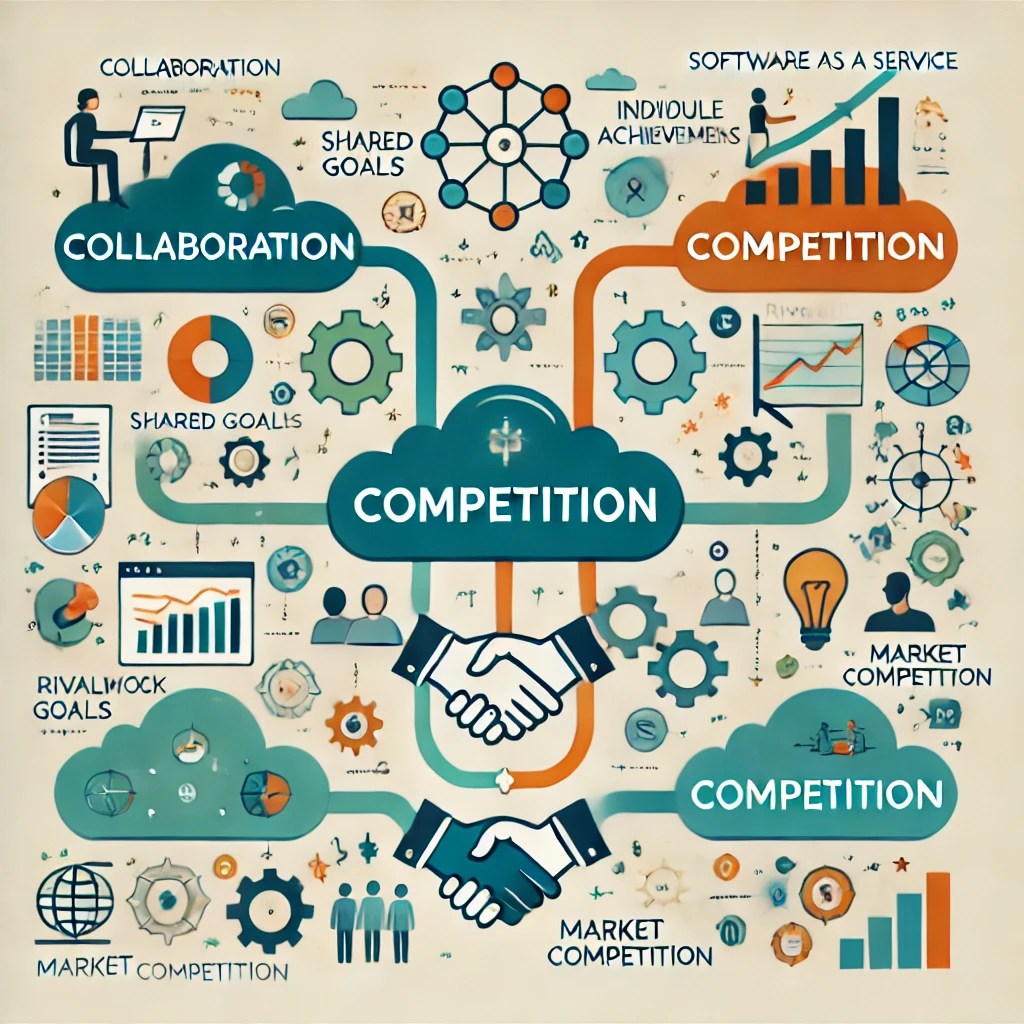
From a strategic perspective, ServiceNow’s AI-centric shift also draws attention to a larger game theory scenario: will the future of enterprise software hinge on collaboration or competition? Companies must decide whether to follow proprietary paths in AI development or embrace more collaborative, open standards.
For example, Google’s TensorFlow and Microsoft’s Azure AI platforms reflect a collaborative model that fosters ecosystem growth, allowing partners to contribute to the AI evolution. On the other hand, companies like Apple maintain a proprietary approach, which fosters competition. ServiceNow’s focus on GenAI seems to strike a balance between the two, offering AI-powered solutions while maintaining a broad integration strategy that invites partnerships across cloud, IT, and mobile.
Drawing from Chris Voss’s negotiation insights in “Never Split the Difference”, companies that succeed in the AI race will have to navigate these competitive dynamics. Will they seek to dominate with AI models or thrive through cooperation? Understanding where the company sits in the game and leveraging strategies from game theory could be critical to ServiceNow’s next moves.
A Historical Parallel: The Internet and Chip Revolution
Looking at history, we can draw parallels between ServiceNow’s AI shift and other technological upheavals like the internet and chip industry revolutions. Andy Grove, who led Intel through its critical transition to microprocessors, understood that companies must continuously adapt to survive in the face of technological disruption. Grove’s philosophy, famously captured in his quote “Only the paranoid survive,” resonates with today’s rapid advances in AI. Just as Intel’s semiconductor revolution reshaped computing, AI is transforming the digital landscape today.
Moore’s Law, initially predicting the exponential growth in transistor density, now has an AI parallel, with algorithms becoming more sophisticated and ubiquitous each year. Much like Intel became foundational to the chip industry and Microsoft to software, ServiceNow is positioning itself at the core of this AI revolution. The speed at which businesses need to adapt, particularly to subscription and consumption models in cloud computing, mirrors the urgency and rapid changes seen in both the chip and internet industries. Early adopters of these shifts, much like Intel in Grove’s time, are likely to benefit from network effects and exponential growth.
The Impact on Business Models: Consumption vs. Subscription
Perhaps one of the most critical questions facing businesses today is how AI-driven innovation will impact traditional consumption and subscription-based models. As AI systems like ServiceNow’s NowAssist automate more tasks, the traditional “subscription” model—where businesses pay for fixed, pre-defined services—may evolve. Instead, we are likely to see businesses move toward dynamic consumption models, where the cost is determined by AI-driven performance, automation levels, and real-time analytics.
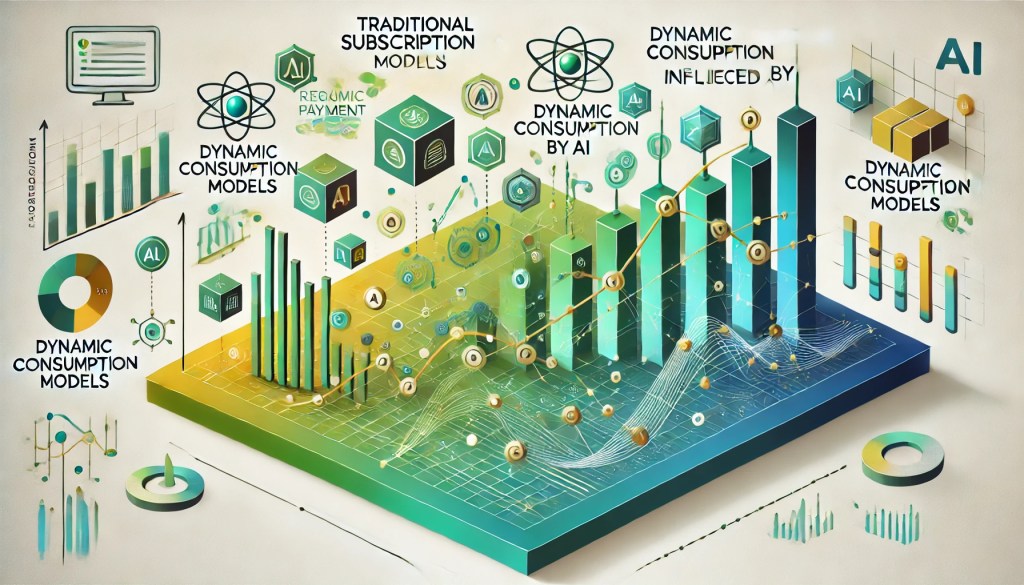
For example, companies may no longer be billed for a “subscription” to an IT service but rather for the real-time utilization of AI agents solving customer problems.
This dynamic shift, akin to on-demand pricing models seen in cloud services like AWS, will fundamentally alter how enterprises budget for IT and AI investments. Leaders like Steve Jobs, who was instrumental in creating demand for mobile ecosystems, might argue that the key to success will be designing AI services that consumers can’t live without.
A Future Beyond AI: Quantum Computing, NLP, and Large Data Models
Beyond the immediate AI transformation, other technologies are poised to accelerate these changes. Quantum computing, for instance, will play a crucial role in unlocking new AI capabilities by enabling the processing of massive datasets in real-time. IBM’s Watson Quantum project is at the forefront of this development, pushing the boundaries of what AI can achieve by leveraging quantum mechanics. When combined with advanced natural language processing (NLP) models, companies like ServiceNow could offer even more nuanced, context-aware AI assistants, transforming workflows and decision-making processes.
Nvidia, under the leadership of Jensen Huang, has been instrumental in the current AI revolution, especially through its partnership with ServiceNow. This collaboration allows ServiceNow to harness Nvidia’s powerful GPUs, which are critical for powering the deep learning and machine learning models driving today’s AI advancements. Nvidia’s technology is already foundational in AI and will continue to play a critical role as AI expands into more complex tasks.
Additionally, quantum computing’s impact on AI will also be far-reaching. Much like Bill Gates’ vision of putting a PC on every desk, the future may hold AI agents capable of solving complex problems in seconds—tasks that current classical computers struggle with. As Michael Lewis outlines in The New New Thing, these disruptive changes create vast opportunities for companies willing to bet on emerging technologies. Businesses that fail to embrace these advancements risk being left behind, much like those that missed out on the internet boom or the rise of mobile computing.
The Societal Question: What Does This Mean for Us as Humans?
As AI and GenAI rapidly evolve, it’s essential to consider the broader societal implications alongside our focus on ServiceNow. Will AI augment the human workforce, making us more efficient, or will it displace certain jobs altogether? Daniel Pink’s concept of autonomy, mastery, and purpose in the workforce raises important questions about how these factors may be altered in an AI-driven environment.
For businesses using ServiceNow, this means reassessing workforce roles and exploring how AI tools will integrate into day-to-day activities. Organizations must also consider the ethical implications of AI adoption, including job displacement and privacy concerns.
Just as the automobile and Industrial Revolutions forced humanity to redefine labor, the AI revolution will likely require us to rethink our relationship with work and technology.
Call to Action: What Does This Mean for You?
As these technological shifts accelerate, I encourage readers to ask themselves:
- How does your business plan to leverage AI and mobile tools to remain competitive?
- What strategies are you considering to navigate these AI-driven changes?
- How will you ensure that your workforce can thrive in this new AI-augmented world?
I’d love to hear your thoughts! How are you approaching these changes in your organization?

Let’s embrace the future with open minds and proactive strategies, ensuring we remain not only relevant but innovative in the face of this AI revolution.
Enjoyed Reading? Let Me Know! 👍
If you found this article insightful or thought-provoking, please consider giving it a thumbs up or sharing your thoughts in the comments! Your feedback helps me create more valuable content. Let’s continue the conversation about the future of AI and how it impacts us all!
Appendix: Works Cited
- Casey, Pat. Interview on the future of ServiceNow and AI integration. ServiceNow, [October, 2024] [Link to Article].
- Grove, Andy. Only the Paranoid Survive: How to Make the Most of Crisis Situations and Change Your Business for the Better. Currency, 1996.
- Moore, Gordon. “Cramming more components onto integrated circuits.” Electronics Magazine, 1965.
- Voss, Chris. Never Split the Difference: Negotiating As If Your Life Depended On It. Harper Business, 2016.
- Lewis, Michael. The New New Thing: A Silicon Valley Story. Vintage, 1999.
- Pink, Daniel H. Drive: The Surprising Truth About What Motivates Us. Riverhead Books, 2009.
- Nvidia. “NVIDIA and ServiceNow Partner to Advance AI for Businesses.” NVIDIA, [May, 2023]. [Link to article].
- IBM. “Watson Quantum.” IBM Research, [Link to project page].
Disclaimer
The information provided in this article is for informational purposes only and should not be construed as professional advice. The opinions expressed in this article are those of the authors and do not necessarily reflect the views of ServiceNow, its employees, or any affiliated organizations. The content has been created with the utmost care and consideration; however, the authors and publishers cannot guarantee its accuracy or completeness. Readers are encouraged to conduct their own research and consult relevant professionals before making decisions based on the information contained herein.

 SNC Development
You must be logged in to post a comment.